
Action clarity
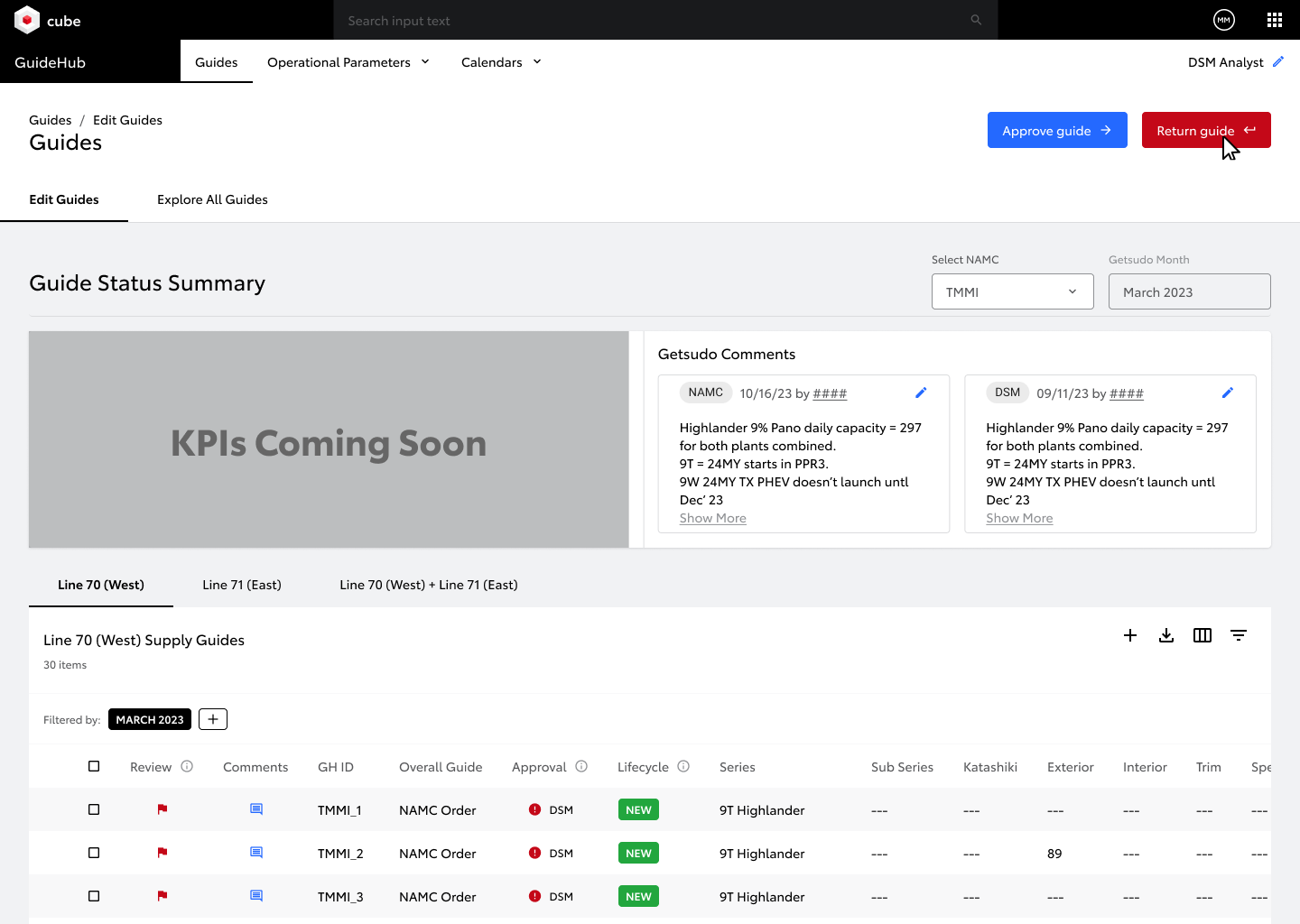
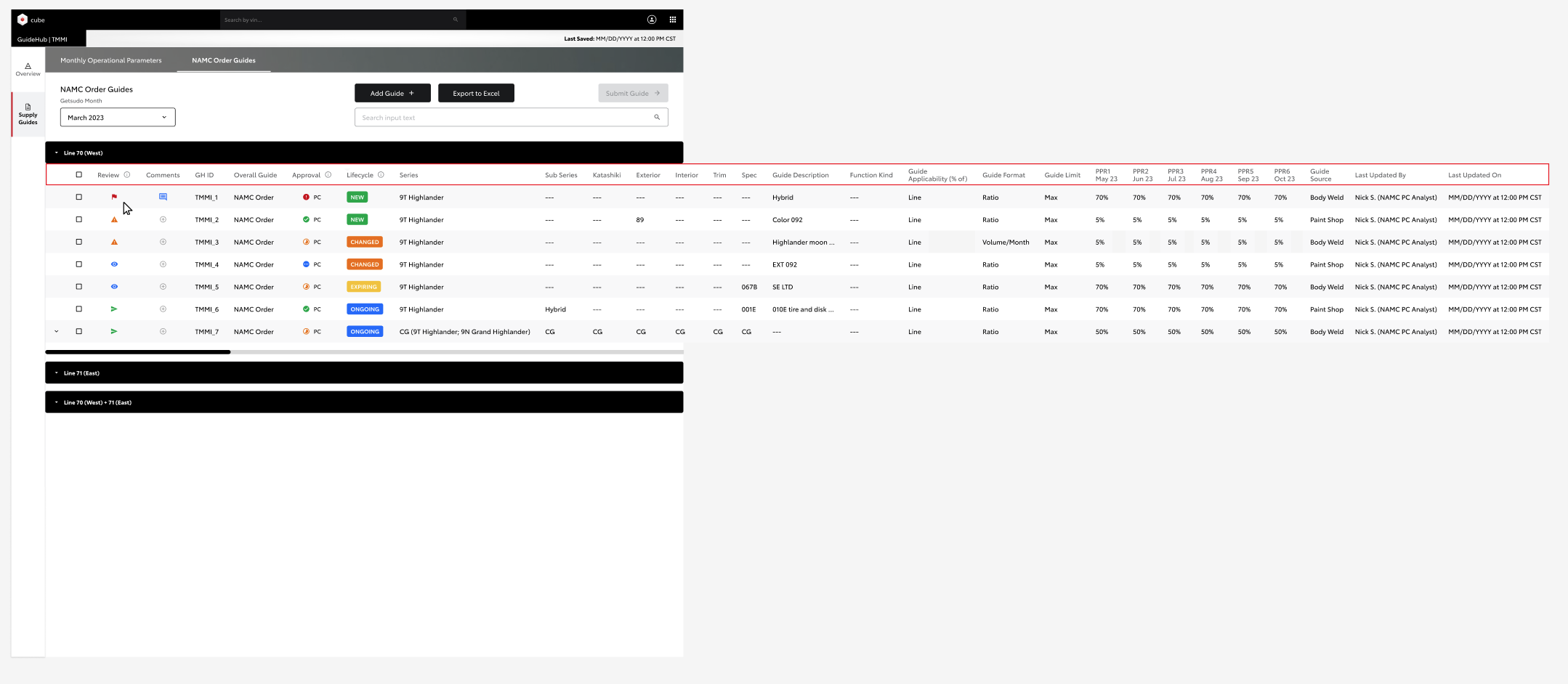
Every CTA was rendered as a primary button. Users couldn't tell which action was the next step.
+ 01 / Intro
 Guidehub
Brought in as emergency support after an executive escalation — diagnosed a broken upstream artifact and restructured the relay that produced the surface symptoms.
Toyota Guidehub is Toyota’s internal supply-chain operations platform. This engagement focused on the workflow — a multi-step flow letting Distribution Service Manager personas review vehicle configuration codes across linked sub-guides before approvals propagated downstream. When I joined, the project had been escalated to executive review and the consulting partner had been switched mid-engagement. Trust was eroding. I was brought in as senior emergency support to firefight.
PCA approval flow — where the engagement lived
+ The problems
The project was in crisis, so triage came first. I identified the three most critical surface symptoms — the ones that were objectively wrong, not matters of taste — and traced them to a single upstream cause.
PROBLEM 01
Across the screens I audited in the first week, the same three fundamentals were broken everywhere. Each one is an objective rule, not a matter of taste — which is why I led with them.
Every CTA was rendered as a primary button. Users couldn't tell which action was the next step.
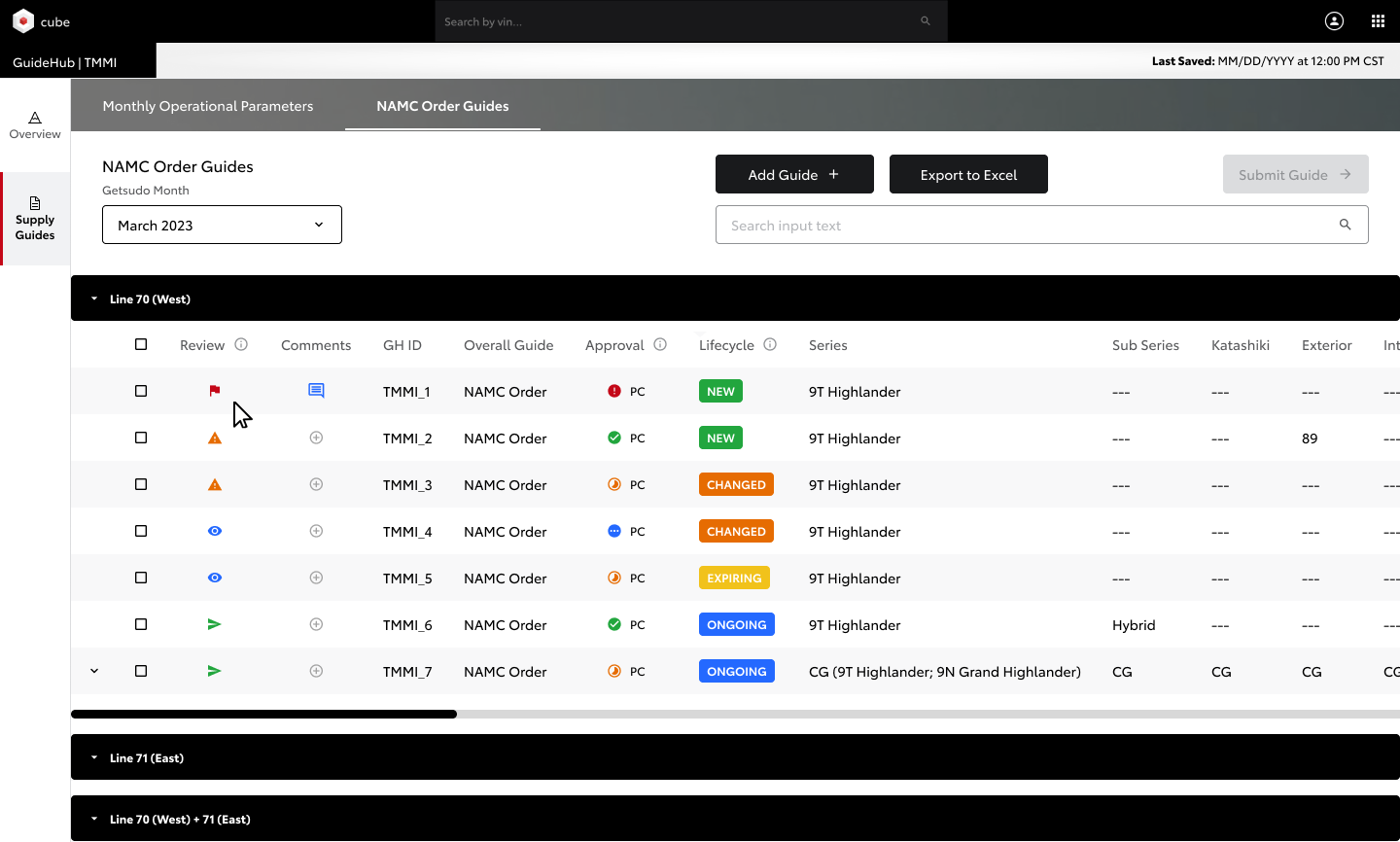
Green / blue / red meant different things on different screens. The user's learned mapping was broken.
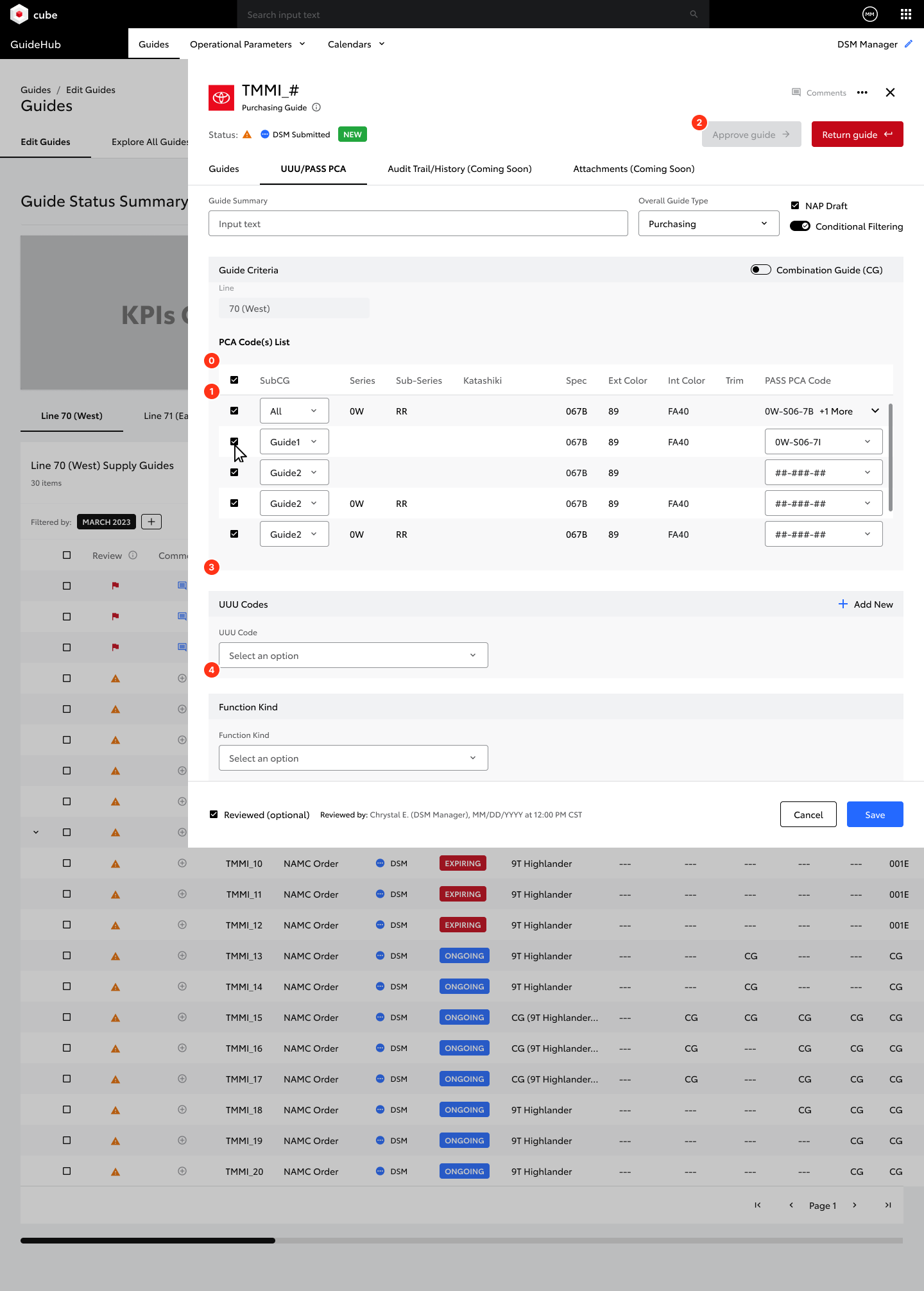
Wireframes only worked on an infinite Figma canvas. At the real 1280-px implementation breakpoint, layouts broke.
One primary action per screen. Secondary actions should carry less visual weight. Across the platform, almost every interactive element was rendered as a filled primary button, leaving users with no signal about which step was actually next.
Color is language, not decoration. Same meaning → same color; different meaning → different color. In the platform, success- green, info-blue, and error-red each meant something different depending on the section — so the user’s learned mapping broke every time they navigated.
A 1440-design that breaks at the real implementation breakpoint isn’t finished. The form below was specified at full Figma canvas width, with all fields visible at once — so the bottom actions appeared reachable on paper but were never on screen at implementation size.
PROBLEM 02
Once the surface symptoms were named, I looked for the cause. Tracing the artifact upstream, the breakdown wasn’t on the design team’s side — it was in what the design team was being handed.
+ The fix
I didn’t try to fix every screen. I picked the three most objectively-evaluable problems on the surface and rebuilt the upstream BRD so the same problems stopped getting generated.
For Action clarity specifically, I led a pass that restored a single primary action per screen and pulled secondary / tertiary actions down a tier in weight. The same logic applied to color semantics and viewport audits across the platform — but the before / after is clearest on the action-hierarchy fix.
Every action rendered as primary; no hierarchy signal.
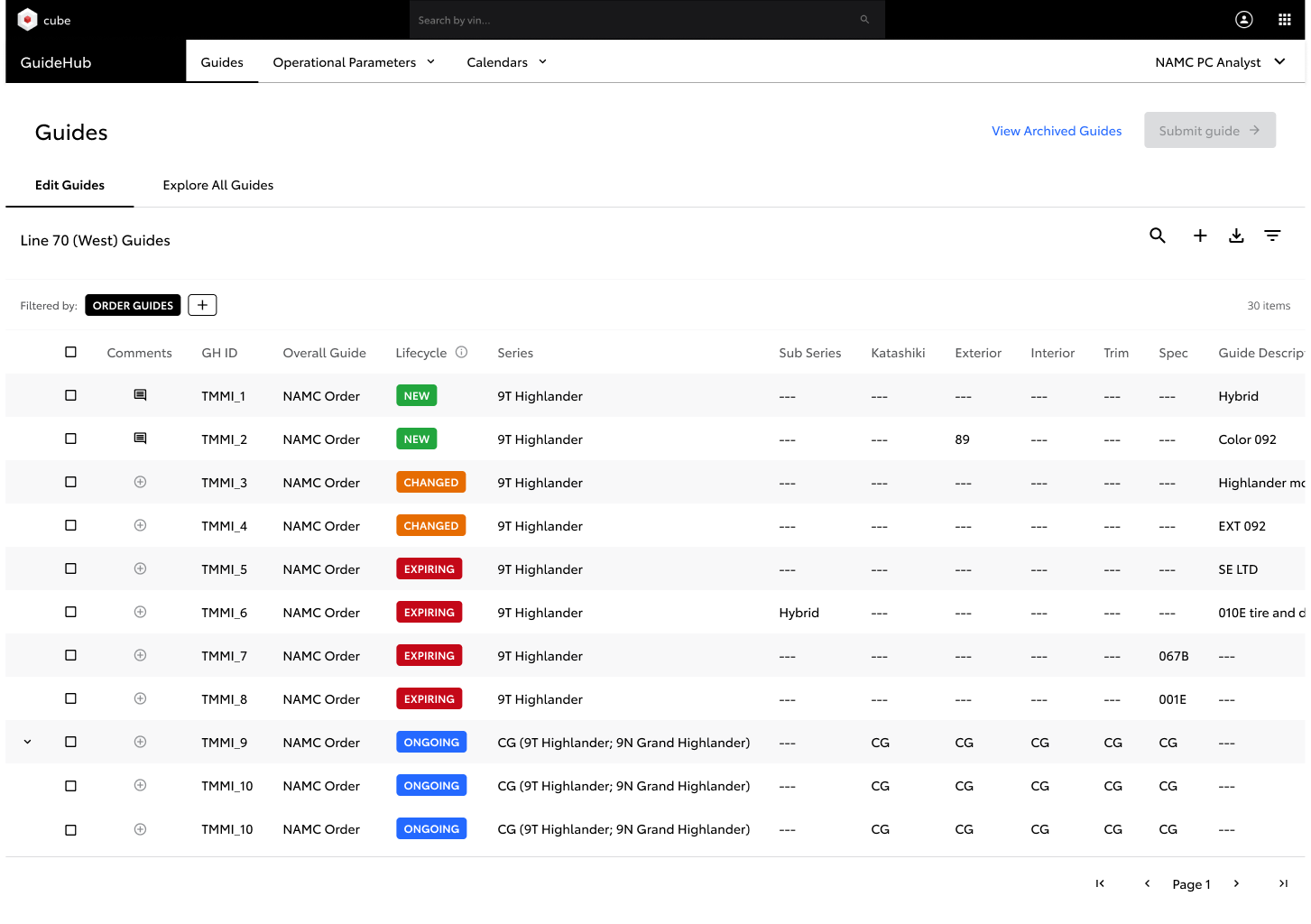
One primary action; consistent secondary + tertiary treatment.
The surface fix would have only held if the BRD kept handing designers UI atoms. So I worked with the design and business teams to define a new BRD communication framework — one that carried outcome and context across the relay, and left the UI decision on the design side where it belonged.
✕ WHAT WAS MISSING IN THE OLD BRD
✓ WHAT THE NEW BRD FRAMEWORK CAPTURED
THE RELAY, RESTRUCTURED
+ Impact
The most concrete result was the project itself — escalated to executives when I joined, rescued by the time it shipped. The more durable result was what came after.
Beyond resolving the tactical issues, I played a core role in upskilling and unblocking the design team — and the relationship outlived the engagement.
As a result, I was later asked to lead training initiatives — Designers’ Collective, Figma Fundamentals, and the Data Visualization Practicum — shaping the next generation of internal design talent.
Surface symptoms are easier to argue about. Structural causes are easier to fix. The lesson I’d carry into the next emergency engagement: ask “where does this artifact come from?” before fixing what it produces.